THE DEATH HAPPENS GUIDE — FREE REVIEW EDITION
Understand the decisions before you have to make them under pressure.
The Guide explains end-of-life planning in plain language: what each decision affects, what families often overlook, and when state-specific forms or professional advice matter. It is the context behind the companion Workbook.
WHAT IT HELPS YOU UNDERSTAND
• People, legal authority, and essential document locations
• Money, insurance, property, and business interests
• Healthcare values, advance-care planning, and care wishes
• Password systems, devices, online accounts, and digital legacy
• Funeral, body, memorial, obituary, and survivor considerations
• A practical process for starting, sharing, and reviewing your plan
WHO IT IS FOR
Adults planning ahead, adult children helping parents, caregivers, executors and trustees, property or business owners, and anyone who wants to leave fewer unanswered questions.
FREE DURING THE REVIEW PERIOD
This is a review edition, available at no charge while feedback from friends, readers, and professionals helps shape the final published version. Download it, use it, and share what is clear, missing, or difficult.
GUIDE OR WORKBOOK?
Choose the Guide when you need explanations and context. Choose the 180-page fillable Workbook when you are ready to record names, locations, roles, decisions, and action lists. Get both for the complete system.
The Guide provides educational and organizational information. It is not legal, financial, tax, or medical advice and does not replace state-specific forms or qualified professionals.
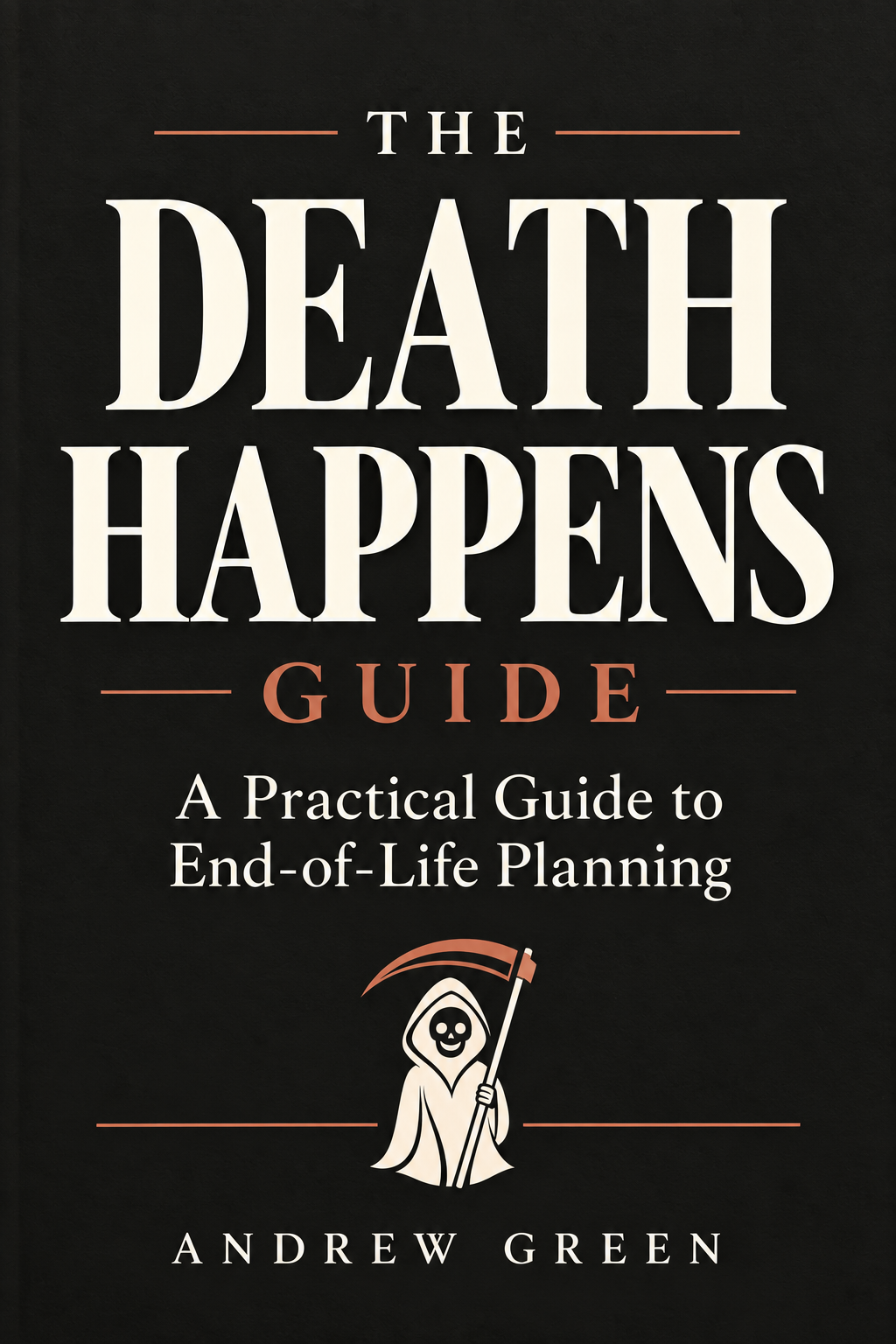
Free review edition of The Death Happens Guide. This plain-language guide helps you understand the decisions, documents, and conversations that can spare the people you love from unnecessary confusion later.
• Understand legal authority, healthcare wishes, accounts, property, digital legacy, funeral planning, and survivor responsibilities.
• Know which documents matter, where they should be kept, and who needs access.
• Work through difficult choices with practical explanations instead of legal or medical jargon.
• Use checklists and a clear sequence so you can start without trying to solve everything at once.
• Pair it with the Workbook to turn what you learn into a usable plan.
Available at no charge during the review period while reader and professional feedback helps shape the final edition.